How my mom killed Santa

©2013 Beret Olsen
©2013 Beret Olsen

When I was little, I went to Prairie Market with my mother to do the month’s shopping. Prairie Market hawked groceries at a grossly reduced rate, leaving everything in shipping cartons in an unheated warehouse. Since it predated the days of ubiquitous scanners, we dug cans of soup out of the crates, and wrote the price on each one using a red wax pencil. I got to ride around on a platform hand truck instead of in a janky cart.

In a weird, frugal way, it was awesome.

On one fateful shopping trip, however, I looked up from my can-labeling extravaganza to see my mother sneaking Christmas candy into our pile of supplies. This might not seem like a big deal to you. Keep in mind that–except for a pack of Trident gum in the kitchen cupboard–we never had candy in the house. I came unhinged. I made a huge scene. Demanding to eat it then and there, I fussed and begged and whined until my beleaguered mother thrust a small, foil-wrapped Santa at me, allowing me one single bite.

She wrapped the chocolate back up neatly and paid for it with the rest of our haul.

Then…weeks later…

On a cold and jolly winter’s morning, I reached into my stocking and pulled out a half-eaten Santa.

What??!!

I immediately marched over to inform my siblings, two of whom offered feeble explanations; the last looked away, likely stifling a guffaw. What was this, I wondered? Could they not handle the truth? I squinted at them–perhaps with a bit of pity–not realizing the absurdity of the situation: a six-year-old unveiling life’s truth to a room full of teenagers.

*****

Cut to this year.

At around 10:30 pm on Christmas Eve, I was crouched on the floor beside the bed, reading my godforsaken, depressing book by headlamp, trying to stay awake without disturbing the spouse.

Must. Stay. Awake.

I know. That was pathetic, given the hour. It’s not like I had to make it through midnight mass or anything. But, after two weeks of insomnia and holiday hullabaloo, I was really ready to hit the hay.

Trouble was, one of my kids was on the couch in front of the stockings, holding some sort of vigil. Whenever I thought she must have dozed off, I would tiptoe to the top of the stairs and look down, only to witness her stirring, waiting, watching.

I was torn. Don’t my kids know who plays Santa, anyway? Wasn’t that the reason for her vigil, to have real proof beyond past year’s mistakes and discrepancies, such as:

How come this present is wrapped in paper we have in our office closet?

Why is my friend’s Santa so much more generous?

and

Why didn’t Santa bring what I really wanted:  an iPhone?

If I just bailed and went to bed, I’d be fresh for the morning. I could stick some gifts in the stockings after sunup, right? It’s the same stash, either way.

Suddenly, I felt an overwhelming sense of empathy for my mother, the Santa-killer. I was by far the youngest of four kids. She had been willing herself awake for eighteen Christmas Eves so that some imaginary person could take the credit for all of her thoughtful work. That woman was done.

Sigh.

I’ve only been at it half as long. I can’t yet bail in good conscience.

Ho, *#^%(!), ho.

No longer a country girl

A Hogna Wolf Spider from www.commonswikimedia.org.
A Hogna Wolf Spider from http://www.commonswikimedia.org.

I used to pride myself on being part country/part city.  Hey, I’ve handled mice AND muggers.  That might have made me feel a wee bit superior now and then.  I was once in front of my inner-city classroom, going over the daily schedule, when I noticed a half-dead mouse wriggling maniacally, stuck irretrievably on a glue trap in the front of the classroom.  As I continued to talk my students, I walked to the closet, fished out a plastic bag, scooped the poor creature into it, sealed it, and handed it to some unsuspecting truant in the hall to “please dispose of in the bathroom.”  My eight-year-old posse never suspected a thing.  (If I have disturbed your pacifist nature, remember that a) rodent fecal matter in an elementary school is a serious health issue, and b) glue traps are the only legal means available from our school district.  And what was I going to do?  Scrape it off and rush it to the vet?  Let it flail there indefinitely?)

Sadly, last year’s trip to the country convinced me that I am mostly just a run of the mill city girl/coward these days.

The first clue was after a very difficult bedtime.  Not my bedtime.  I would love to go to bed at a reasonable hour.  The spouse was dog-tired, and had fallen asleep long before the girls.  I tried semi-successfully to get them into bed.  I read and gave kisses. Next thing I knew, one or the other was screaming, “there’s something on my leg!!”  Lights back on, we would examine their beds inch by inch, inspecting the covers and the pj’s,  inside and out.  Eventually they would calm a little; I’d read another chapter aloud and turn out the lights.  “I hear something!” the other would yell, just as I got back down the stairs.  After three or four false alarms, I may have gotten a little cranky.

It was midnight when they finally gave up and went to sleep.  Relieved, I fetched my book and sat on the couch, trying to relax enough to be able to sleep on the world’s least forgiving mattress.  It’s the kind of bed that makes you want to punch the quality control guy at the factory.  Imagine a concrete slab with a little less give.  Top it off with an itchy, mildewed wool blanket, and a lumpy brick for a pillow.  I love my parents, but how their marriage survived forty summers on this abomination, I have no idea.

Not that I wouldn’t want to read in bed, I just plain couldn’t.  The bedside lamp could light up the neighboring forty acres, and a headlamp would be relentlessly dive-bombed by moths and mosquitoes.  Couch it is.

I read a few chapters and was just starting to doze on the couch when I scratched my thigh.  It was not the right shape.  I scratched once more, and again encountered strangeness.  I closed my fingers around a large something.  I had a handful of something in my pajamas.  Dropping my pajama pants, I saw that gigantic spider, and then it disappeared.  That was way worse than having to crunch a large freaky thing.  Was it still in my pajamas?  Was it on the couch?  Would it follow me to bed?  I was no longer sleepy.

A couple of nights later, the spouse had already left for the city, and I tried to cozy myself on the concrete slab.  I read the teensiest bit, and as my eyelids drooped, I turned off the light and slipped into a happy slumber.  Wait.  What was that?  I was itchy again.  After the pajama problem, I was a little skittish.  On went the lights.  Off with the pajamas.  Nothing to be found.  Now the bed felt impossible again.  Everything itched.  

I spent an hour or so reading on the couch, trying to calm down enough for sleep.  This happened two more times.  By now, it was 3 or 4 am, and I had had enough.  I ripped off the covers, one by one, looking, looking.  I inspected my pajamas repeatedly.  I took the headlamp and gave the sheets the once over.  I ran my hands over the moth-balled gingham sheet.  Lumps.  Lumps.

Under the bottom sheet were creatures. That is not supposed to happen.

I’d been sleeping on these sheets for three days already, but trapped under that bottom sheet were two crickets–one live, and one dead.

I know. They’re just crickets. They are charming outside, just like spiders are fascinating in their amazing webs outside. The bed is sacred, though. The bed is where one goes for a peaceful respite, not for the zoo.

I was being ridiculous.

But I couldn’t wait to get back to the city.

On Being Scandihoovian: Probably Part One

©2010 Beret Olsen
©2010 Beret Olsen

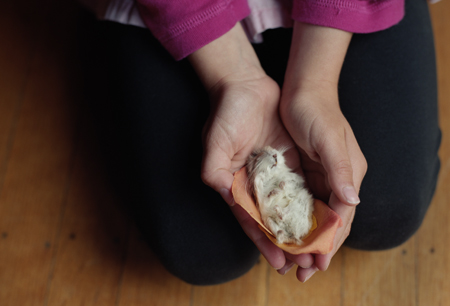
Not long ago, an acquaintance walked into my entryway and stared at a photograph I had taken of my daughter holding her pet hamster.  “Is that guy dead?” she asked me.

I suddenly felt very, very uncomfortable.

“Uh, yeah,” I said, unsure whether to feel embarrassed or ashamed. I picked both.

She looked at it for a long, uncomfortable moment before announcing: “That is sooooo Scandinavian.”

I had no idea what she meant, but since I’m 100% Norwegian, I figured she might be on to something. It was time to investigate.

I have relatives who swim daily in the ocean off the coast of Oslo, and run around their mountain cabin naked in the middle of winter–no doubt after a good dose of Aquavit. I can assure you that this is not what it was like for me in my childhood home. My parents are the sort that drink a thimble-full of red wine for medicinal reasons, and comport themselves in a dignified manner at all times. I think I’ve heard them raise their voices three or four times in my entire life.

Growing up, I was carted off to Junior Sons of Norway on Saturdays, where I learned the Norwegian national anthem–which I can be easily enticed to sing, with great enthusiasm–and Min Hatt, Den Har Tre Kanter (My Hat, It Has Three Corners, a deep and lyrical song, as you ca imagine). I was fed Lutefisk (fish soaked in lye) once a year, and taught to say grace in Norwegian whenever we excavated the dining room table and broke out the china.

I associate my ethnic roots with a palate-numbing dose of pickled herring, passed like treasure in a tiny, silver-rimmed dish at Christmas dinner. In fact, Christmas arrived with a long list of Scandinavian things I can’t and/or won’t eat:  Swedish meatballs, fruit soup, lefse, herring, rice pudding. (Sorry, Mom. I love you.) My mother would hide an almond in the rice pudding, and whoever found it got an extra present on Christmas Eve. I loved this tradition, but despised rice pudding. I would shove a spoonful around on my plate, and if I couldn’t find a nut, try to reorganize it in a polite way which simulated ingesting an honorable amount.

But I think it goes much deeper. Those Norwegian immigrants were unflinching, hardworking, stoic powerhouses in the face of the adversity and desolation of the Plains. In fact, my name was plucked from Ole Rolvaag’s Giants in the Earth, a chronicle of Norwegian immigrants in the Midwest. I have visited his house multiple times, read articles, and listened attentively to stories about him, but I have never, ever been able to make myself read the book. Here’s why: from Wikipedia, “The novel depicts snow storms, locusts, poverty, hunger, loneliness, homesickness, the difficulty of fitting into a new culture, and the estrangement of immigrant children who grow up in a new land.” What’s more, I heard my namesake has a paralyzing case agoraphobia.

“Is it true Beret goes crazy in the book?” I asked my mother. “Why would you name me after a character like that?”

There was a quiet pause.

“She really pulls it together in the second book,” my mother said, finally.

How Scandinavian.

Ah, Halloween! Cow parts and unchaperoned children.

small halloween

I wore the same fairy costume for four years running.

My getup consisted of someone’s worn and baggy blue dress, a cardboard tiara, and a star covered with Reynolds’ Wrap and taped to a piece of dowel.

Back then, the time change came earlier in the Fall, so it was nice and dark early on the big night. Unfortunately, it was also ridiculously cold, and because my parents loved me, I had to wear a coat covering my costume. They probably did not recognize this as the great disappointment it was, especially since everyone had seen my costume numerous times already.

I’m pretty certain my sister was asked to look after me, but what junior high student wants a baby sister tagging along with her posse after dark? Consequently, I had free reign of the neighborhood from a staggeringly early age, and my candy was only stolen once. No other tragedy befell me.

I would wander, giddy and anxious, mesmerized both by the boisterous clumps of people I wasn’t sure I knew, and by my paper bag, swelling with forbidden sweets. I would take them home and count them, chart them, graph them. I would eat two or three pieces, then squirrel the rest away, doling it out so it would last until Easter–the next time we got a statistically significant dose of sugar.

Once I got a bit older, I branched out and tried new costumes, always outdone by the girl who lived catty-corner from us. How did she predict my costume three years in a row? My mummy costume was made out of an old sheet torn into strips, and held together by an array of safety pins. It drooped and exposed my sweat pants in embarrassing patches. Julie’s father was a doctor, however, so hers was made out of surgical wrapping that clung magically to her gloating face.

Multiply that stinging feeling by all three years. I suppose I would have developed lingering unpleasant feelings about the holiday were it not for the Halloween party we had in our basement the year I turned eleven.

In my opinion, all basements are inherently cold and creepy, and ours was no exception. Scariest of all was the storage room, with concrete walls and floors, and rickety metal shelving loaded with spider webs and long-forgotten boxes. We shoved a few things out of the way so we could guide blindfolded kids one at a time into its clutches.

Perched here and there on the shelves were a variety of bowls into which we plunged their unseeing hands. One held eyeballs, or peeled grapes, and another brains, which was clammy cooked spaghetti.

Things got weirder.

Once a year, my parents purchased a side of beef, which was cut and meticulously wrapped and nestled in the extra fridge in the basement–the one without a handle, that we wrenched open with a dish towel and a finely choreographed hip maneuver. We had no shortage of strange cow parts in the basement freezer, so we thawed a variety of organs to fill the other bowls.

Given the location and ingredients, I suspect that our haunted house would have been just as creepy without the blindfold. And though this may reflect poorly on me, I reveled in the yelps and screams of our guests, and later, their wide-eyed wonder when we revealed the bowls’ actual contents. I think most of them had hoped that what we passed off as a heart might not really be a heart.

The piece de résistance of the evening was the Ghost Cake with Flaming Eyes, however. I remember so clearly that feeling of triumph when we turned out the lights again and lit the eyes.

Ever since that night, Halloween has been my favorite holiday.

©2013 Beret Olsen
©2013 Beret Olsen

I wrote a whole post about my Ghost Cake on LobeStir. Here’s the link–you could make one, too!

Happy Halloween!

To the girl with the “shrinking” mother–

Read this yesterday, and it snagged in my consciousness. Both sides speak well and truthfully. I think we have conflated strength and power with their cultural definitions, and it is helpful to step back and rethink. I had trouble posting this, though, and couldn’t get the youtube video to embed properly. The link to the poem’s performance is in there, and definitely worth a watch. It also provides the context for Rarasaur’s essay.

TO THE GIRL WITH THE “SHRINKING” MOTHER–

10/22/2013 · by  · in journals. ·

I listened to your poem last month, for the first time. I know, I’m a little late to the party. Your performance was in April.

It was sent my way via an article that said it explained the plight of women, who sacrifice for men. I’ll be honest. Activism that suggests someone is behind because someone else is ahead bothers me. Feminism along those lines is what makes me reject the label with a ferocity that would surprise most people– given that I am the “breadwinner” of my home, and in most ways live the feminist ideal. This type of activism suffocates me, and angers me, and limits my brothers and sisters alike– and though I didn’t intend to– I listened to that poem without a beginner’s mind. I sought offense, and I found it– even though your poem was great, and your performance was brilliant.


I wrote my own slam poetry response. The first parodied yours. Yours played on the idea that men of age are often significantly larger than their wives. Mine played off the idea that women live longer.

“Men of my family have been shaving away seconds of life, for women, for decades.”

The second poem I wrote was structured like yours as well, but along the way led into the idea that my mother is the strongest person I know.

This made me reassess my reaction to your poem, and create an alternate possibility that I’d like to share with you.

You see, I’m nearly 30, and it was just a smidge over a decade ago that I would have scoffed at the idea of my mother possessing any strength at all.

I could barely look her in the eye for a whole year of my teens.  She seemed like such a waste– this stunning, genius of a woman– reduced to a mother with a near broken back, working all the time for other people’s desires.  I don’t know if she’s ever slept more than 8 hours in a row.  As soon as she gains something, she gives it away– whether it was space, or knowledge, or money. Every time I saw her, I feared the same would happen to me.

I worried that I had been taught to drop my achievements at a moment’s notice– in the name of handcuffs created to hold women back– just because of my mom’s dedication to those same restrictions. I was worried that I was born into a kind of slavery.

squigg1And then there was the car accident.

You see, I have 5 brothers and sisters– so not everyone fits in one car.  My big brother had the baby seat, so he was following behind us with my baby sister.  The rest of us were with my mom.  It was a dark night and we were driving back from dropping my father at the airport– down a fast-moving, icy highway. There were black ice warnings out, and I was in the front seat because I could almost always spot the slippery stuff.

It started to snow, in torrents hard enough to push at the car, and then from the side mirror, I saw it. My brother’s car spun out of control and rolled off the road and down a hill. I screamed his name, and my mom– who witnessed the same thing– put her hand out on mine. She sang a song, to keep the kids in the back of the car asleep, and drove steadily on until there was a place to safely stop. There were tears running down her face, but her voice was clear. She parked the car on the side, put me in charge, took off her 2 inch heels, and walked into the dark snowstorm barefoot– bravely towards what could have been the mere bodies of her children.

squigg3I’m not sure on the details, but my brother’s car was started again, and pushed up the hill– and both he and my baby sister were fine.

When I saw my mom finally walking back to me, hours later, the sun was coming up– she was soaked through, and covered in dirt and blood.  She was holding her children– and a stranger– and she was smiling.

It occurred to me then that a passerbyer might see her as a woman down on her luck, in a position of weakness– but it was the most invulnerable thing I had ever seen. The sort of strength many people never get the chance to witness in a lifetime.

It sounds like you might have blessed by the benefit of an equally dedicated mother.

A dedication to sacrificing is such a brittle concept, and can look a lot like weakness– like late night trips to the fridge for yogurt and wine from a measuring cup– but it is more powerful than words or swords.
squigg5

I of course do not know your specific situation, but the next time you see her tucked away in a small space, consider the possibility that it is because she doesn’t need much space to live the life of her dreams, and that she has faith in your ability to do something brilliant with the extra room.

And next time you see worn hands, or a tired back, consider the idea that it is because she has made a priority out of carrying those who cannot move forward themselves.

When the people around her seem to grow at the cost of her loss, lookagain.  Their expansion is her battle cry.  She is victorious through nurture and sacrifice.

It is a power connected to the heart of the universe.  A strength that fueled a nun to care for lepers, and prompted a man to share a dream of equality.  It echoes through every positive change humans have ever seen, and grows every day under the protection of guardians like our moms.

Does that really sound like shrinking to you?  Because to me it sounds like something big enough to expand its way right past the hemmed edges of the galaxy.

squigg4I realize now that I wasn’t worried that I would becomemy mother. I was worried that I would never become the sort of person worth the sacrifices she made.

Snaps to you for showing off your power.  I hope you know that your mom is right to give to you: you are worthy of all the good this world has to offer.  If you can accept that truth, I think you’ll find you’ll stop apologizing for empowerment.  Just do good with it.

With love from a big sister born of the same big power,
Rara

_______________________________

I probably won’t respond to any comments about feminism, because it’s an issue that goes much deeper than my type of blog– but as always, you’re welcome to share your thoughts as long as you play nice.  This post has seen the light of day due to a Daily Post prompt, asking about the post I was most nervous to publish, and what it was like to set it free.  I’ll get back to you on that last part of the question depending on how scary my comment section ends up being.

Have you ever driven on black ice? It’s one of my top fears, even before this night.

To the girl with the “shrinking” mother–.

personhood vs. parenthood

Last year, I was feeling so smug, because I watered my orchid stick for six months and it bloomed on Mothers' Day. This year, it's just a stick.
@2012 Beret Olsen     Last year, I was feeling so smug because I watered my orchid stick for six months, and it magically bloomed on Mothers’ Day. Sadly, this year it’s just a stick. Oh well. Happy Mother’s Day anyway.

One summer day in my early teens, my parents and I went on a long drive from our woodsy cabin to Lands’ End.

Though we had hoped for a sunny day on the coast, the fog was so thick we could barely see the sea from the shore. We meandered along the water’s edge in our own little pocket of cloud, quite separate from the world beyond. I thought I would say something nice for a change–perhaps even express some filial gratitude–when I noticed an odd look on my mother’s face.

She raised her arms, laughed out loud, and launched her sprawled limbs into a cartwheel in the sand. It was so astonishing, so completely unexpected, that I suddenly realized how little I knew about her beyond the character she played at home. Now I might consider her as more than my mother, someone whose inner life might be rich and complicated, someone who had lived a lifetime before she made me.

Not that she ever turned another cartwheel, but still. I continued to wonder about her, too Scandinavian to pry.

The only clue I had to her younger days was a doll she called Judy, which she had lovingly arranged in a child-sized rocker facing my bed. She was eerily beautiful, despite a crack across her cheek, a worn petticoat, and misshapen, yellowed socks. Judy had stared at me tight-lipped for years, never spilling the secrets of my mother’s childhood or beyond.

I imagined my mother quarantined on her parents’ plastic-covered couch, hands folded primly, dreaming of play; dreaming of siblings.

Did her parents have the same ancient hard candies back then–the ones at which I stared during my visits to Grandma’s– arranged in the same fancy china dish?

As an adult I get little glimpses of her as a non-mom. Like the night my spouse got her a little tipsy, and she dropped the f-bomb telling a joke. How lucky for me, that there are still opportunities to hear my mother’s stories.  Now, to find the time and the courage to ask.

I look at my kids and wonder: when will I suddenly appear to them as more than a purveyor of fine snacks, a laundress, a driver, a shoulder to cry upon? What will I do or say that will alert them that there is an actual person in my shoes? Chances are, they’re already clued in. I haven’t played the role quite so gracefully as my mother.

I know it’s not Pearl Harbor Day, but I’m thinking about my mom anyway

I stole this photo. As far as I know, no photograph exists to accompany this story.
I stole this photo from http://www.plasticsoldiers.webs.com/.  They didn’t even put up a fight.

I try to be a nice person. I certainly want to be one. Unfortunately, I’m starting to believe I might not be genetically wired for punctuality and thoughtfulness. If I have missed your birthday, it’s not because I don’t care about you; I just plain forgot. Like my brothers, whose birthdays are lost somewhere in the sad, endy bits of summer, the problem is that your birthday doesn’t automatically appear on my calendar. Apologies to all of you.

Fortunately, my father’s birthday falls during the Thanksgiving season, and my sister’s is on or around the first day of spring, so even if I don’t write them down, there is always something on the calendar to magically remind me.

Easiest of all to remember is my mother’s.

My mother turned ten the day the Japanese bombed Pearl Harbor.

That must have been a memorable birthday, with everyone huddled around the radio, speechless and shaken. Probably not the best one, mind you, but remarkable, nonetheless.

Over the years, my mother has championed everyone else’s special days, but on hers she lays low, no doubt hoping someone might step up and do a little something for her for a change.  We have tried.

We learned early on that Dad was good for a Hallmark card and a nice little gifty item, but he was not to be entrusted with the cake. In his defense, he did attempt to make one from a box once, but was so flummoxed by the words “ten-inch tube pan,” that he gave up and drove to Piggly Wiggly.

It’s worth mentioning that in our house, store-bought baked goods were a sign of approaching moral turpitude.

After that mini debacle, we siblings started juggling responsibility for the cake amongst ourselves, usually ironing out the details the morning of December 7.

One year, though, my medium brother decided to make an Angel Food Cake. He even started the project the DAY BEFORE. Impressive. We were all reasonably decent cooks, but we had some respect for his ambition. If you’ve made an angel food cake, you know what I mean.

Out came the ancient Betty Crocker cookbook, heavily thumbed and coated with a light dusting of flour from decades of use.

My brother looked so serious, meticulously pouring over Betty’s good book. We thought everything was under control, and gave him a little space to work his magic.

It’s uncertain exactly what went wrong. The reigning theory is that he must have combined elements from a couple of different tricky recipes arranged on the same page.

All I know is that it looked beautiful when he pulled it out of the oven. Betty said to cool the cake by flipping the whole pan upside down and sliding it onto the neck of a wine bottle. That way, the cake would cool but still stay light and airy. Trust me, if you’ve whipped 12 room temperature egg whites into a heavenly cloud, if you’ve sifted the cake flour four or five times, and spun the superfine sugar, you want that cake to be FLUFFY.

Medium brother flipped the pan, only to have a half-baked cake carcass collapse onto the counter.

Sad.

After a minute or two of reverential silence, he scooped the remains right back into the pan and tossed it into the oven for another thirty minutes or so.

Then, the cake and my brother mysteriously disappeared for several hours.

Nothing more was said about the cake that day. We like to sweep things like this under the rug. I figured he had made the shameful Piggly Wiggly run, and was off somewhere, nursing his culinary wounds.

The next day was a Sunday. Everything proceeded normally: fried eggs for breakfast, followed by church, then dinner in the dining room. Sunday was the one day a week that the mail was cleared off the table. My father presented the card, the gift. It was time to sing.

Medium brother thumped down to the basement and emerged with the most astonishing sweet mess I’ve ever seen.

The cake mass had been roughly sculpted into some sort of landform and half-sunk battle ship. These were situated on a homemade wooden platform, which was covered with Reynold’s wrap and an ungodly amount of blue icing. There were American flags, tiny plastic boats and planes, and little soldiers everywhere.

It was, hands-down, the most impressive birthday cake I’ve ever seen, and to top it off, surprisingly tasty. Not like an angel food cake, perhaps–more like an epic Pearl Harbor Day cake reenactment would taste. But not too shabby.

Atonement

It may have been a little unclear, but I was actually happily married until I posted Man Shopping a while back. Obviously, I did not paint a complete picture—I’m pretty sure everyone figured that out. Still, in the interest of domestic harmony, it probably wouldn’t hurt to throw a few compliments in my spouse’s direction right about now.

I would also like to mention my Undying Gratitude that he does not yet have his own blog. I hope he’s not in any hurry to get one, either. Over the years, I have unwittingly provided a great deal of fodder for retaliation.

What follows are just a few of the ways that he generously compensates for buying fröot juice on occasion.

Now that his parole papers are in order, he is the perfect travel companion.

That sounds WAY WORSE than it was. There must be two sorts of parole papers, because this was an INS thing; not a prison thing, as far as I know. Apparently, even if you are married to a US citizen, there is still a boatload of paperwork and a lot of wait time to endure before they let you come and go as you please–which is why I took my friend instead of my groom on our honeymoon.

Now that he has his paperwork in order, though, traveling with this guy is delightful. We are interested in many of the same sorts of places and adventures. More importantly, his attention span for lying around, traipsing about, or absorbing culture is almost exactly the same as mine. We can look and look and know precisely when to leave and get a tasty snack or go for a swim. Having traveled with a variety of other people, I know that this tidy alignment is not guaranteed. Not everyone knows when an intense experience on the streets of Phnom Penh might best be topped off with, say, a Richard Pryor movie and a little air conditioning.

I worried that children might mess with our travel groove, but now that they can tie their shoes and attend to their bowel movements independently, it is actually a joy to have them join us. Now, if only Mary Poppins could come along so we could have a date once in a while…

In truth, we might not be as well suited in terms of musical taste. But, over the years, we have learned that certain music should only be played in the others’ absence. Topping the audio blacklist: Bruce Springsteen, Cold Chisel, Joni Mitchell, and the soundtrack from Hair. I’ll let you sort out who likes which. Still, the fact remains that:

He appreciates good music, played well and played loudly.

Long before kids, my spouse worked in the audio industry, and consequently purchased a set of very, very nice speakers. He set up the living room so that the red velvet love seat was exactly centered between the speakers, facing them, with two more speakers behind. We put red light bulbs in the chandelier, turned the music up to 11, and voilà, the Red Room was born. The Red Room was awesome. It had a great run, too, though I suppose it caused its own demise by inadvertently producing our first kid. That was a particularly great night.

What followed were painful years spent listening to Sesame Street songs as quietly as possible, and struggling to find an inner zen-like happy place when Raffi songs were required. I’m surprised we survived that era.

Now that our oldest child is ten, however, with a blue streak in her hair and a pair of drumsticks to match, we have begun a practice of family karaoke night. I cannot begin to explain how charming it is to see our dainty seven-year-old belting out Hell’s Bells, while the spouse works the mixer and magically gets the lyrics to appear on the TV. He also wins for most enthusiastic musical performance. I might need to up my game a little, frankly.

Who knows, the full-fledged Red Room might even make a re-appearance, though I suspect we would have to cede some of the musical selection to the kids. There is probably a lot more Dev and Taylor Swift in our future than one might hope.

He has the ability to fix almost anything.

He has fixed the dryer, the dishwasher, the car, the shower…He is truly amazing. He can hook up any appliance, rewire the house, and frame a room.

There really isn’t anything amusing to say about this. It’s just awesome.

This has made me aim higher. I have been moved to unclog drains, mess around with the disposal, and even monkey with the color printer. Not always successfully, but still.

Now we get to the most important part.

On one particularly trying day, after many meltdowns, a lot of sass, and a series of eruptions of all sorts, one of my kids stuck a stuffed alligator in her pants at the dinner table. Since I was in a foul mood, I found the harmless incident much more annoying than necessary. My husband, on the other hand, took one thoughtful look and pronounced, “That’s a croc of shit.” It was impossible to stay grumpy.

This man has a knack for sanity-saving comments and for maintaining a sense of humor in the midst of parental hell.

Here is someone who suffered with me through one of the longest hours ever spent. We were watching a production of the Wizard of Oz for the second or third time–a production full of confused small people singing enthusiastically off-key, and mumbling endless and incomprehensible dialogue. To enhance our enjoyment, several lightly supervised boys in the row in front of us made fart noises and punched each other in the arm. Eyes politely fixed on the stage, my spouse leaned over and whispered: “Now we know the TRUE PRICE of unprotected sex.”

As I struggled to keep my composure, he mimed a samurai maneuver, slicing open his torso and extracting an organ or two. That gesture has become a very reassuring symbol of solidarity, and is especially helpful in situations where passing a flask might be frowned upon.

Thanks, pal. You can bring home a fifty pound bag of rice whenever you want.

Let’s put that in the closet with the rest of the skeletons

Taken from the website for Wausau Fire Department home page
Found on the Wausau Fire Department homepage: http://www.wausaufire.com/

My family’s summer home burned to the ground in front of our eyes. We stood across the road in our pajamas, in what should have been the dark.

It had been an airy old farmhouse, with a screened-in porch and a breezeway connecting it to the barn. Dubbed “Viking Villa,” our friends had painted a Nordic vessel on the front of it, complete with red and white striped sail. A long gravel drive curved up and away from the house, making a gentle u through the surrounding meadow. I can still see it so clearly, though only from one side, one vantage point, and in one sort of weather, because the memories I have are not my own. They are borrowed from my parents, my older siblings, and from the single surviving photograph.

I was only six months old when it burned.

The cabin of my childhood still stands strong, tucked into the woods about a mile away. Shortly after the fire, my folks scraped together $400 to buy that little hunters’ cottage, in which they have slowly replaced each board and nail, leaving only a few great beams and the original fieldstone fireplace. It was here that we gathered, summer after summer, to hike, and work, and canoe; it was here that we reminisced about Viking Villa.

We would all troop down to “the old cellar hole,” picking the wildflowers that grew in the ruins, and looking for smoky bits of melted glass. Sometimes we would return at night, too, and lie on our camping tarp in the middle of the meadow there, watching for shooting stars.

My oldest brother would spend hours reconstructing the house and the surrounding tree forts with graph paper and a neatly sharpened pencil. Everyone would pore over his drawings, offering suggestions and admiring his impeccable memory–so precise despite the years that yawned between now and then.

And in August, as the evenings grew cool, and we huddled around the stone fireplace to warm and to read, someone would inevitably launch into the story of the fire. We relived the event, detail by detail, lovingly recounted.

No one knows how or why my mother awakened that night, though credit has been wordlessly given to divine intervention. Despite the fury and speed of the approaching flames, she hustled everyone out safely, telling my sister, “Now is not the time for crying. We can cry later.”

As far as I know, nobody ever did.

A friend had gotten up to use the bathroom at that time, on that night, and happened to glance out the window in our particular direction. It was a series of coincidences for which the whole township was grateful. Seeing the flames and great plume of smoke miles away, he alerted the volunteer fire department, and though it was too late to save the house, they managed to salvage the chicken coop, the surrounding woods, and distant neighbors. Who knows how much of the landscape would have been devoured that night had he slept soundly.

No one mourns the clothing and possessions that went up in smoke, or the pile of cars that our friends had left in the barn for safekeeping. No one even says much about our cat, Smoky, who was never seen again. The only items that were ever mentioned were the hand-typed thesis my father went back to retrieve, and the stuffed dog of my sister’s that he did not.

But the house. How everyone longs for the house.

The clumps of melted glass sit on the windowsill of our porch, where one of us might finger them gingerly, like jewels.

The chicken coop was moved next door to our ‘new’ cabin. We had never had chickens–to my knowledge, we had never used the coop at all–but now it was lovingly cleaned and aired and repainted. A desk was made out of an old door and some table legs, put out there for my father and his friend to finish their doctoral theses. And when they did, the coop was renamed the Institute for Advanced Study.

Meanwhile, we painted and rebuilt and added on to the little hunting cabin, but it always paled in comparison. As if to compensate, we arranged the flowers from the old cellar hole in a bright yellow pitcher, and set it by the fireplace.

After twenty or twenty five years, the cabin finally earned its own name–“Oesterheim”–and a compliment or two about the way the sun threaded through the tall trees, landing in tiny warm pools on the wood floors. Around then, I heard my mother say for the very first time, “You know, I think I like this house.” I guess we were finally coming round.

Even so, we continued to relive the fire at Viking Villa, time and again. It gave me such an odd feeling, as if the house were a sibling I never knew. Sometimes I envied the rest of the family their experience, because it wasn’t my story to tell; my role was to listen quietly in the background.

One night, not too many years ago, we went to one of our annual summer get togethers. The evening was in full swing when, as usual, the conversation turned to the fire.

There was a comfortable familiarity with the discussion, and I found my mind drifting a little, sneaking peeks at the sunset over the lake.

Then, out of nowhere, one family member cleared their throat and spoke very, very quietly.

“I’m pretty sure I started the fire,” they said.

And that is the last time we reminisced about the house.

The Daybed

@2010 Beret Olsen
@2009 Beret Olsen

I don’t say this to evoke pity. Please don’t read it in a melodramatic tone in your head, or season it with melancholy. Think matter-of-fact. It is what it is.

I was a bit of an accident.

I asked my mother about it, once, and she paused for an uncomfortable moment before responding. “Honey, by the time you showed up, we were so happy to see you.”

Even as a child, I knew what that meant. That explained the six years between my sister and me. It explained why nine years separated me from one brother, and twelve from the other. It explained why I often felt like a child in a roomful of adults, and why, for many years, the taller people in the house took some precedence. It wasn’t all bad, though. In general, they also took the heat and the blame.

When we were all at home in our little red house, we piled atop each other, and tensions tended to rise. My parents hastily carved out the attic to make two bedrooms, one for my brothers, and one for my sister and me. When my brothers began to chafe at those close quarters, the eldest retreated into the basement with a black light bulb and day-glo Easy Rider posters. Once my sister hit her teens, though, when it became increasingly awkward for us to share a room, there seemed nowhere else to expand.

After much debate, it was finally decided that I should move into what was essentially a throughway, a roomy passage between the kitchen and the bathroom. As one might imagine, I had extremely limited space for luxuries such as clothing or books. There was a shelf put in, and a small dresser crammed under the stairs. There was a window which peered at the garage, and I hung a few things on the wall, but because everyone trooped through this space during waking hours, I couldn’t have my bed down there. Instead, I was allowed use of “the daybed.” Never mine; just the. This was a couch-like thing which served as a cot-sized bed at night. I didn’t really mind. Mostly. It beat witnessing my sister’s eighth grade make-out sessions.

The daybed was very simply designed. Very nordic. Imagine a cheap door, taken off its hinges and laid flat on skinny, pointed legs. An egg-colored foam pad, about four inches thick, lay on top, covered with an upholstery apparently conceived in the seventies. It was a magenta paisley, crossed with a parade of stripes and shapes which have never been seen together since. It was poorly made, too, so the rough metal zipper was entirely visible along the side, and I often grazed the backs of my legs against its voracious teeth. More inviting were the two long, wedge-shaped pillows which served as the back of the couch during the day. These were covered with corduroy of a very specific blue hue, one I still associate with all things quiet and comfortable. I loved to run my fingers along the nap endlessly, with it or against being equally zen-like.

301c

From the daybed, I would doze to the sound of the dishwasher, and wake to the sound and smell of the eternal percolator, a seemingly indestructible wedding gift from the fifties.

It was there that I lay through the German measles and the mumps; there that I listened to my mother read Watership Down.

One evening, my mother found the nuts I had stolen from the roasting pan full of Chex party mix in the basement. They were in an old bread bag, tied in a knot and tucked under the daybed. They might have escaped notice, too, had my mother not helped me put the sheets on that night. “What are you, some sort of squirrel?” she asked, but not too sharply. I was glad when she let it go, perhaps understanding how hard it was to get the good bits when your siblings are so much older and faster.

I remember lying on that daybed the night after the girl scout picnic in second grade, the one where I ate a hot dog stuffed with Velveeta and wrapped in bacon before grilling. I threw up six or seven times–a little daybed volcano–and have never eaten a hotdog since.

I remember lying there sniffling, lamenting my lack of space and privacy, when my medium brother heard me and tiptoed in. We were not a terribly affectionate family, nor emotionally adept, but he explained with such kindness and enthusiasm how he would make it feel big enough. I still feel deep gratitude for that night. He began to schlepp all kinds of things from his room, my sister’s, the kitchen, wherever. He filled that tiny place from floor to ceiling so I could be pleasantly surprised when he it emptied out again, and there would be room to roll over and even to stand with my hands outstretched.

But by far, my favorite memory of the daybed was a secret I neglected to tell anyone, lest I would have to share that, too. Ours was a frugal household, where finances dictated a thermostat set at a bone-chilling 58 degrees through even the worst of the South Dakota winter nights. But when temperatures outside settled well below zero, maintaining 58 degrees still necessitated occasional blasts of delicious heat. A major duct ran through the wall, all along the length of the back of the daybed. Who would know, with the blue corduroy pillows in place all day, what heavenly heat emanated from the wall behind me? I pressed my socked feet against it, snuggling like a cat to a sunny patch, and dreaming dreams.

These days, we set the thermostat at a balmy 62 at night, and I have a heating pad, which spares my spouse from my icy toes. But I think the comfort it offers is not simply a physical one. It is also a remembrance of those long, cold nights, pressed against the wall in my make-shift little roomlet. It is a reminder that there is always enough room for me, and more than enough of what I really need.