How to Survive High School

©Universal Studios

Watch The Breakfast Club a minimum of five times.

Cry a lot.

Laugh a lot.

Care a lot less about what other people think.

Keep a journal, but tear out the pages and discard. Burn them, if necessary.

Read something provocative.

Sing in the shower.

Make something cool.

Make a sound track for the following situations: heartbreak, euphoria, failure, disillusionment, creative foundering, despondency, envy, stupid people, kicking ass, revenge, and staring at the ceiling.

Be a good friend to your good friends–including you.

Avoid all long-term consequences: pregnancy, herpes, jail, death, and dismemberment.

Whoever you are, be more so.

****

A shout out to Mr. Maher and his high school class in San Diego. Every November, he challenges his students to write a 100-word story every day for 30 days. He lets them brainstorm suggested topics, and then writes accordingly throughout the entire month. No exceptions–because he is awesome. I can’t help but be inspired to write a few 100-word stories myself. Surviving high school was yesterday’s topic. Feel free to chime in with your own advice in the comments.

Groundhog Day

I had the great pleasure of hanging out with a particularly hilarious friend over Thanksgiving.

After I had asked him how he was doing, and what was new, he embarked on a soliloquy about every Monday morning at work–where he is not only the boss, but “the elder.”

“It’s like f*cking Groundhog Day every Monday. All these guys in their twenties asking me, ‘Hey, how was your weekend?’ Maybe next time I’ll tell them:

‘OH MY GOD, it was INCREDIBLE. I can’t even BEGIN to tell you about it–in fact, I SHOULDN’T. It would make you feel SO JEALOUS, it wouldn’t be fair. It was OVER THE TOP. EPIC. TRULY.'”

I wish I could better convey his delivery; I laughed until I was a little teary.

If you’re under thirty and/or do not have kids, you may want to bury your head in the sand rather than continue reading.

It’s not like being a grown up or a parent is so awful, it’s just that this question “how was your weekend?” isn’t the right one to ask anymore.

How was my weekend?

Let’s see. I schlepped to Target and Michaels along with every other person on the planet–searching for the blue tri-board Miss Nine needs for her Blizzard project and presentation. There has evidently been a run on blue tri-board. (You will use white and you will not complain, small person.)  I laid awake one night worrying about one friend’s health and another’s imploding marriage. I tried to find a sitter so I might attend a holiday party. When that didn’t work, I tried offering time and a half. No luck. I sat on my kids until they acquiesced to do their homework, and then continually refocused them. It took three times more time than necessary to do the work–plus a lot of complaining. After the recycling bin handle broke, I swept broken glass off two flights of stairs in the rain.

I didn’t sleep in. I didn’t lie on the couch reading or listening to the rain. I didn’t stay out all night and go out for breakfast. Actually, that last one sounds awful, anyway.

There were fabulous moments. I was surrounded by people I love. I saw friends. I did some yoga. I laughed a lot. I devoured way more than my quota of deliciousness. I even went out one evening UNCHAPERONED. It really was a lovely weekend.

It’s just different, you know? Weekends do not equal time off.

I’m hoping someone out there will think of a more appropriate question for Monday mornings, something that twenty-two-year-olds can ask their elders without rubbing them the wrong way.

Six of one, and half a dozen more of those

From Briasimpson.com

Balance is elusive

When the docket is packed, I find myself wishing for quiet

When things are quiet–oh wait, that doesn’t happen

****


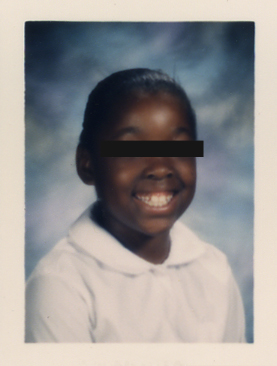
Shaniqua

Shaniqua 1

Shaniqua.

Not her real name, but let’s say it was.

Shaniqua was what we teachers called a hard head—a stubborn, angry child. Her hands curled into fists without thought of consequences. She was tough and short, with chubby cheeks and an occasional toothy grin–an odd mix of Mack truck and teddy bear.

A little unkempt, she always stood out in a sea of school uniforms. Her white blouse was dingy, untucked on one side, and her navy pants were short enough to be last year’s pair. Her hair was not in meticulous cornrows like the other girls’. Brushed tightly against her scalp, it had been scraped into a tiny paintbrush of a ponytail.

Everyday I had my third graders write for fifteen minutes in their journals, but Shaniqua would not write. She despised writing. This frustrated me to no end. I provided prompts. And story starters. And incentives. I encouraged. I waited.

One day, I peeped over her shoulder and was surprised to see half a page of her strange, unformed scrawl. Thrilled, I bent closer to read:

“Today I am really, really, really, really, really, really, really, really, really, really, really, really, really, really, really, really, really, really, really, really, really, really bored.”

I was not getting through.

I tried to talk with her about the importance of her stories. She must have some truly amazing ones. And given the signals she was sending, she likely had some troubling ones as well.

“You have important things to say,” I told her. “We all want to hear.”

Still, she stubbornly resisted.

But one morning late in the school year, Shaniqua came into the room before the bell, flushed and breathless. Though this was strictly forbidden, I happily waived the consequences when she handed me a fistful of letters she had written to her classmates—one for each. I was overwhelmed. I was so proud and excited for her. SHANIQUA HAD WRITTEN TWENTY-SEVEN LETTERS.

I hugged her, and wrote “Shaniqua’s letters” on the daily schedule, just after recess.

“We will pass them out,” I told her, “and we will spend class time celebrating your beautiful writing.” She beamed and ran back outside as the bell rang for line up while I stowed her priceless bounty in my desk drawer for safekeeping.

During recess, ny curiosity peaked; I pulled them out, gingerly opening the first one.

“Andrea, why you think you all that?” she had written. “You NOT.”

I opened another. And another. Turns out, she did have something to say. She had something to say to everyone, but we couldn’t pass out her letters. I wonder if I still have them somewhere, in a box in the garage.

******

A few weeks later, there was a school assembly.

Imagine trying to keep 28 third graders silent and respectful for 90 minutes. Then, when they hear the recess bell ringing, still they must sit attentively–despite being unable to hear or see properly. Most kids try their best, many struggle, and some give up. I wouldn’t mind throwing in the towel myself, sometimes, but I’m pretty sure that’s not acceptable.

Not surprisingly, Shaniqua was having a tough time. She fussed, made annoying peeping sounds, and poked the students in the row in front of her. She leaned back and forth, purposely moving her head into everyone else’s way. She kicked chairs and booed one of the acts. I complimented the students on either side of her. I laid my hand on her shoulder and whispered in her ear. I gave fierce looks. I administered check marks on the behavior chart on my clipboard. Teachers and administrators were looking sternly in our direction. What to do? If I took her out of the auditorium, who would watch the other 27? What to do?

“Shaniqua!” I whispered fiercely. “Pull it together!”

She glowered and continued to poke and annoy.

“Shall I send you to the office?” We both knew this was an empty threat since no one was there to keep an eye on her. “What can we do with you?”

Then, for some reason, I said something I’d never, ever imagined myself saying. “You are acting like a little kid! Do you need to sit in my lap?” My tone was awful, patronizing, and I was ashamed the moment I let the words leave my lips. But there was no way to retract them.

Shaniqua stared at me for a long moment, then crept over and heaved onto my lap.

I had to turn away so the others would not see my eyes fill with tears. She was a little kid–of course she was–and her hard head had not yet frozen her heart.

She rested her little hair paintbrush on my shoulder.


A Thanksgiving Lament: How can anyone possibly focus when the house smells this good?

I’m sure I’d be writing something witty or poignant except that I can’t stop thinking about those artery-clogging potatoes in the oven.

I’m thankful for so much. Friends, family, readers, good books, music, walks up my small mountain, cranberry sage stuffing.

My cup truly runneth over, except for writing ideas, which I still have to claw from a big box of nothing I keep next to my blank screen.

Thought I might drag something out between stuffing the bird and stuffing myself, but I’d rather hang out with my loved ones.

And rescue the wine from the freezer.

Happy Thanksgiving!


Porcupines

From Moth-Eatn Productions.

It sounded like someone sawing a hole in the cabin—which was, in fact, the case. The corner outside my parents’ bedroom was the tastiest.

“Art,” my mother would say, interrupting his snoring. “They’re back.” She’d toss on a robe and march outside, waving the vacuum hose, my father right behind her.

“There’s only one way to negotiate with porcupines,” our neighbor finally said, sliding a cigar box across our table like the scene from a movie.

But no one used the gun.

Instead, we continued to sic mom on them in hopes they would soon tire of the Hoover.

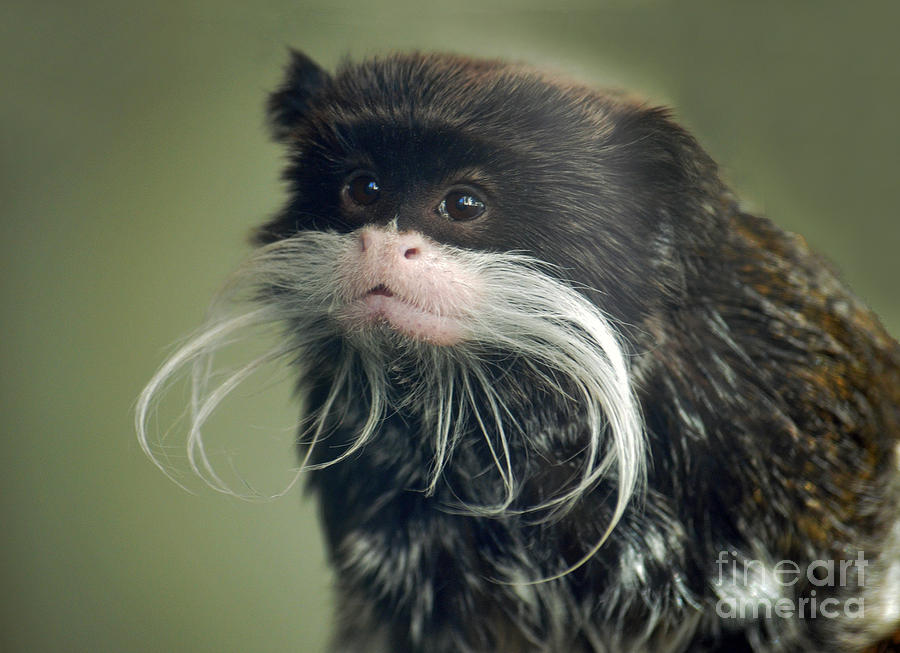
Separated at birth?

mustached-monkey-emperor-tamarin-ii-jim-fitzpatrick

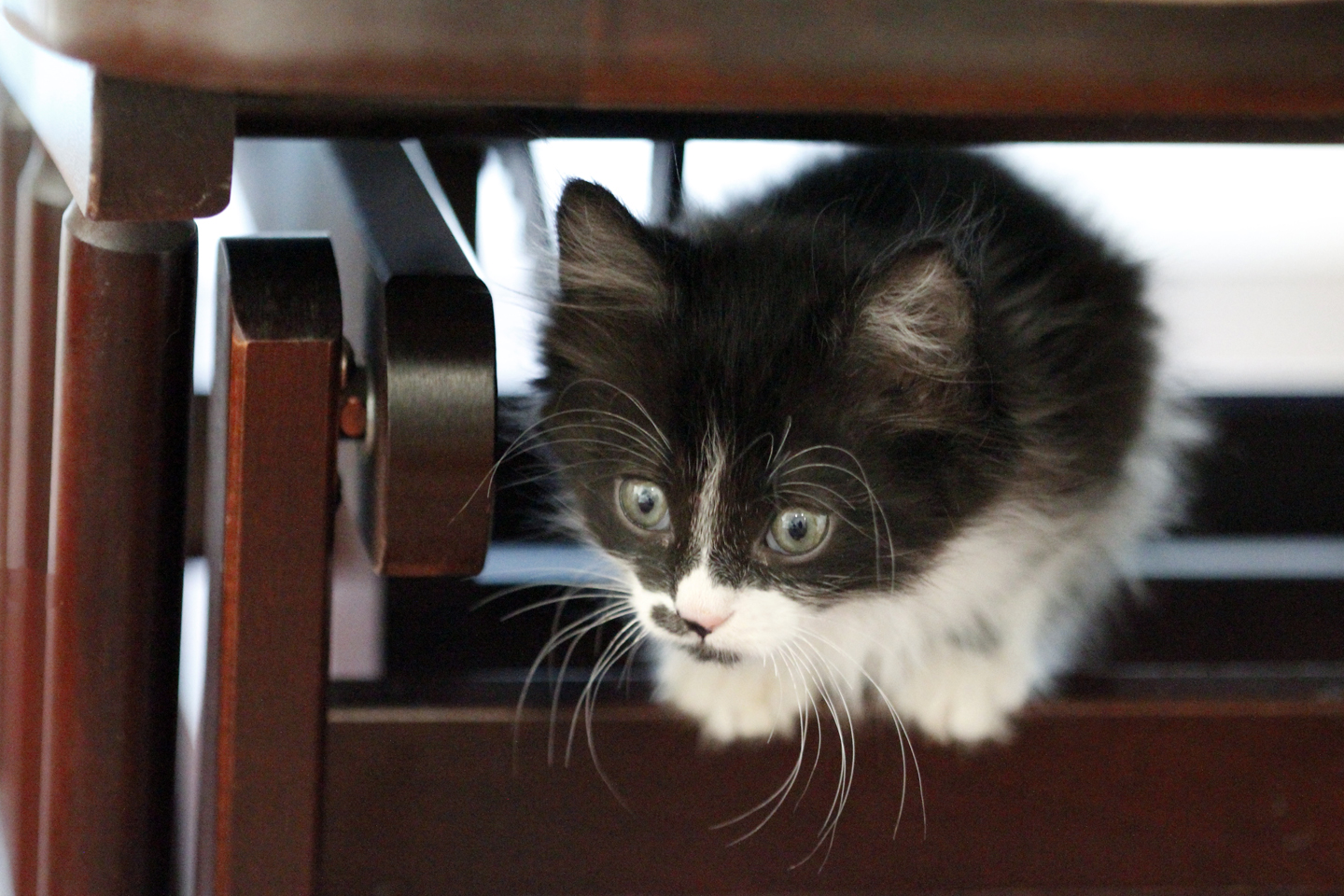
Diamond 1 flip


Pictured above: one of the foster kittens I had to return yesterday. Miss you, little guy. Wish I could have renamed you, since “Diamond” certainly doesn’t do you justice. (I thought maybe ‘Stache–for half a mustache–or Booger, but no one asked my opinion.) Hoping you’re feeling better soon. Maybe I’ll see you in the SPCA windows at Macy’s this season.

And for those of you who can’t stand cats, I promise not to mention them tomorrow.

You Gotta Have Art

Watercolor by Janet Mach Dutton.

For years, my mother kept a button exactly like the one pictured above tucked in a secretary desk in her bedroom. The desk was quite small and finished in country white, with an old-fashioned brass keyhole which was never locked. I would sneak into the room and unfold the desk, revealing all its odd treasures. My mother’s address book was kept there, bulging with notes and corners torn from Christmas card envelopes–so many that she held it shut with an oversized rubber band. There were also cubbies filled with neat little piles of precious papers, an empty jelly jar of dull pencils…and that button.

I looked at the button a lot. I remember its exact size and weight, the sharp barb of the pin. It was not the safety pin sort, but the kind that always protrudes, stabbing mindlessly at curious fingers.

When I consider it now, it is strange how much attention I paid to the little knick-knack. I suppose it looks impossibly mundane, but I loved it. You do gotta have art, I knew. We all knew. Between four siblings, we have studied modern dance, ballet, and theater, violin, piano, painting, photography, string bass, electric bass, viola, clarinet, drums. We got that message. And I loved the pun–“you gotta have heart”–another message taught repeatedly. But the pin’s motto had yet another layer for our family; my father’s name is Art.

We needed art and heart and Art.

I’ve been thinking about that button because my father would have been 85 today, and it is the first birthday to pass without him. As expected, I still need him.

I was a little tender already, then, when I took our three ailing foster kittens in for yet another vet appointment this morning. They have giardia, and though medicated, it’s not improving. One has eye infections, and one started bleeding. Caring for them has been nerve-wracking–they are so tiny, so fragile–and a pain in the neck. I never knew that diarrhea could be tracked up walls, on sinks, floors, doors, cabinets. Up the sides of the cat carrier. Matted in furry tails and feet and backs. How do you get poop on your back, my wee pals? Consequently, we’ve been laundering and bleaching the downstairs three times a day, and still can’t keep up. I shouldn’t have been surprised when the vet told me they would keep the kittens at the shelter instead of sending them back home with me. I should have been relieved.

Instead, I was shocked. My anxiety and love for the kittens, plus the frustration that I couldn’t help them, suddenly got confused with my overwhelming grief for my father, and I stood there, eyes welling over the exam table.

The vet smiled and closed the cat carrier. “Say goodbye to the kitties,” she said. “Nice and quick like a bandaid.” And that was it.

I walked out to the parking lot and sat in the car until I could see well enough to drive.

But unlike the proverbial bandaid, the sting has lingered all day.


Illumination

From Illumination. This is an audio installation in the psych ward of the prison hospital. This part of Alcatraz is normally closed to the public.
From Illumination, an audio installation in the psych ward of the prison hospital–part of Alcatraz which is normally closed to the public.

“The misconception of totalitarianism is that freedom can be imprisoned. This is not the case. When you constrain freedom, freedom will take flight and land on a windowsill.”

— Ai Weiwei

After driving carpools to schools on opposite ends of town last Thursday morning, I put a feline fecal sample on ice in the trunk–oh! my glamorous life!–and made my way through the pouring rain toward Pier 39. As a San Francisco resident, I avoid that part of town like the plague. It’s crowded, kitschy, and leaves me feeling swindled and somewhat culpable. Did you make your way from some other continent to eat substandard, overpriced clam chowder out of a sourdough bowl? I’m sorry. I am.

This time it was worth the effort and the heinous traffic, however. This time I was accompanying an art class on a field trip to the Ai Weiwei exhibition on Alcatraz.

It had felt like an indefensible luxury to take time from what I was supposed to be doing–working, tending to three sick foster kittens, preparing my presentation for the next day. What business did I have squandering four hours on art?

What I had forgotten is that art is not a luxury at all.

Art is good for the soul. Making it, viewing it, contemplating it, discussing it. It is the means for communication when mere words cannot convey what needs to be said. Art can speak truth to power, it can enlighten, it can challenge; it can soothe or amuse or complement the sofa. I’m not saying that all art is important, but rather that being able to do it and see it and think about it is vital. Where Ai Weiwei lives, his ability to make art is tenuous. He has been imprisoned and, after his release, continually harassed. His studio has been torn down by the local government in Beijing. He is forbidden to leave China.

I recall being in a snit once in art school, stressed out about some goofy project I had concocted–making portraits of George Bush by drizzling motor oil, of all things. “What am I doing noodling around in the garage while people are starving out there in the world?” I lamented to a friend. And she responded, “What sort of world would it be without any art?”

I think we both have a point.

Though unable to leave his country, Ai has somehow managed to create a provocative and politically charged show at a provocative and politically charged place. There are kites and legos and audio installations. You can sit in a cell and hear orchestral compositions written in a concentration camp or, a few cells down, hear songs by Fela Kuti, and the Russian punk band Pussy Riot. You can read about the charges against 176 political prisoners and exiles from around the world, and write them letters while sitting in the prison dining hall. These are “the heroes of our time,” as Ai says. They have had the courage to speak up, and they are paying a high price.

Ai Weiwei’s vision has landed on our windowsill. Go and see it if you can. 1.4 billion people will never lay eyes on it.

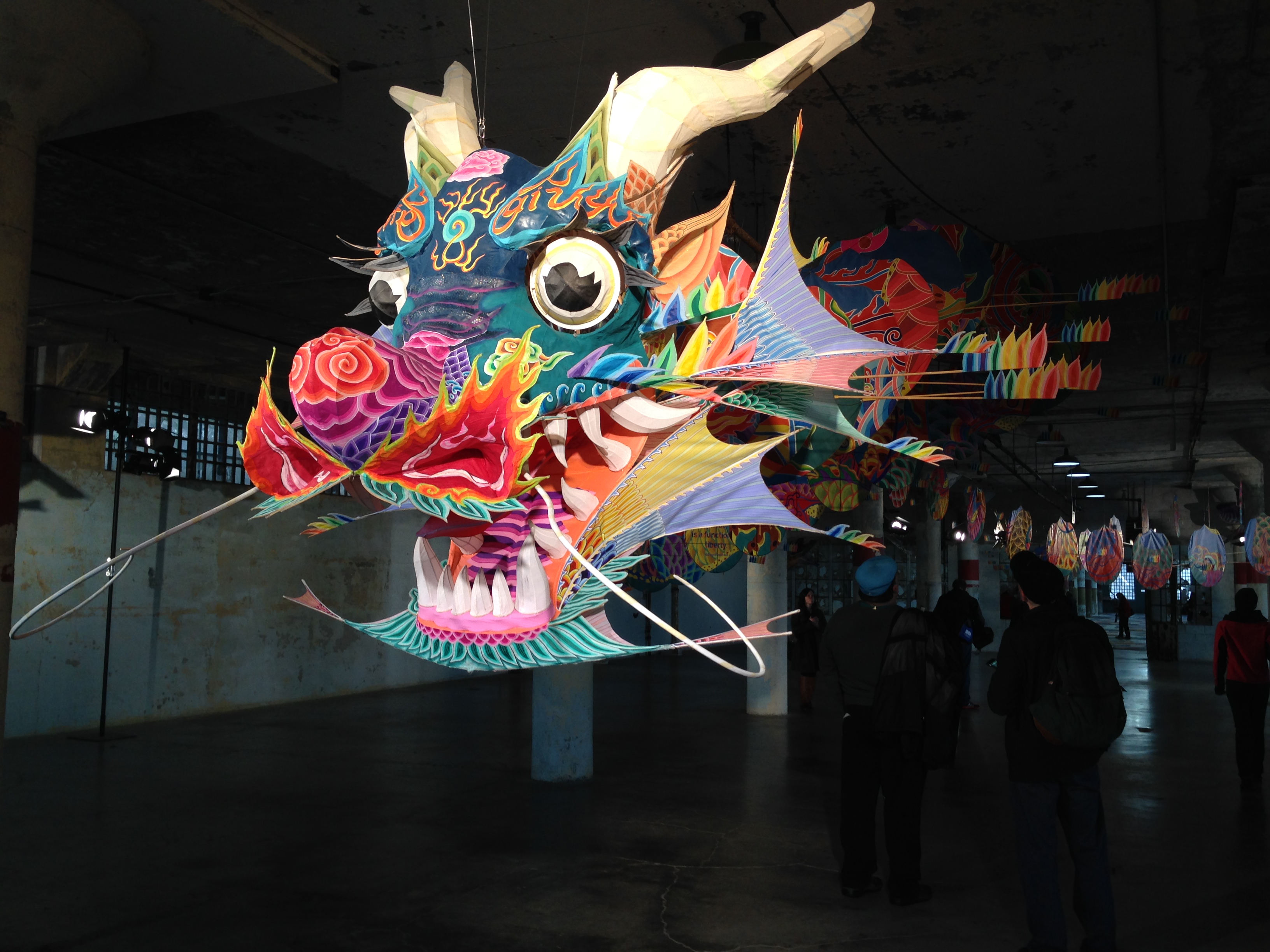
The head of the main kite in With Wind.
From Trace, comprised of 176 portraits made from Legos.
Stay Tuned.
From Stay Tuned. It seemed to me that the walls were singing.


I STILL HAVE NIGHTMARES

From www.tasteofcinema.com
From http://www.tasteofcinema.com

I was the youngest of four in a house with a cat and a dog, plus the occasional hamster, hermit crab, and a series of chameleons who would disappear and mysteriously wind up in the dryer. Despite this, my mother tried valiantly to keep tabs on me. At nine, when I was caught trying to read Sybil and Go Ask Alice, she repeatedly warned against inappropriate reading material.

Instead, I filched my sister’s copy of The Shining. I propped my social studies textbook on end and hid it inside, reading voraciously while Mrs. Denevan tended to the more flamboyant rulebreakers.